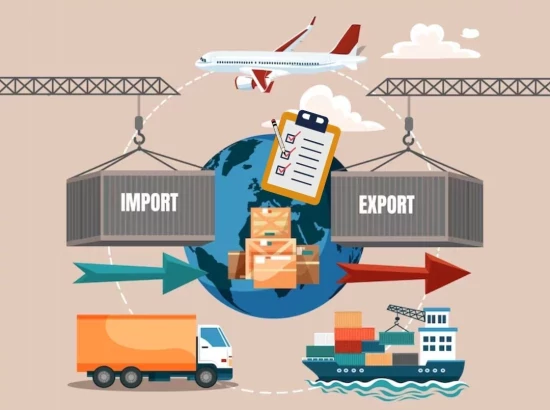
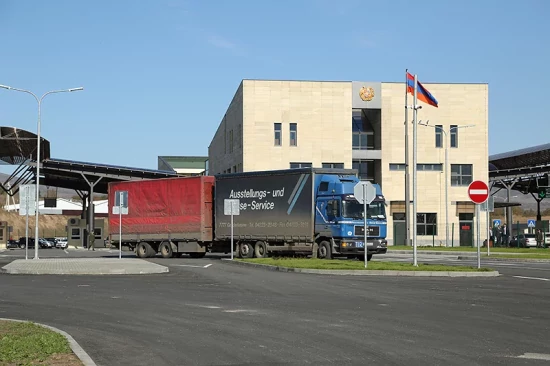
Armenia's foreign trade is growing rapidly. During January to August 2025, Armenia's foreign trade turnover exceeded 12 billion dollars. Alongside this growth, the complexity of customs procedures has increased — particularly since 2022, when many companies that relocated to Armenia significantly expanded their import and export activities. Turn.am lists customs clearance specialists and organizations that can help you navigate this complex landscape.
Armenia has been a member of the Eurasian Economic Union (EAEU) since 2015, which fundamentally changed the country's customs regulatory framework. For all businesses, importers, and exporters operating in Armenia, understanding the implications of EAEU membership is essential.
The EAEU Customs Code is the primary legal document governing the import and export of goods in Armenia. EAEU membership means that goods imported from Russia, Belarus, Kazakhstan, and Kyrgyzstan do not require customs clearance at internal borders. However, imports from third countries are subject to the EAEU's common external tariffs, which increased from approximately 3% before EAEU accession to over 10% afterward.
Armenia shares no common border with other EAEU member states. This means that most goods from EAEU countries reach Armenia through Georgia, creating additional logistical and customs complications that must be factored into import cost calculations.
Armenian customs authorities frequently challenge declared values and apply reference pricing, particularly for certain product categories. This can result in unexpected additional costs if proper documentation has not been prepared. An experienced customs broker can help avoid such disputes by ensuring a complete documentation package is in place.
Although using a customs broker in Armenia is not legally required, in practice it often becomes a necessity for businesses — especially when dealing with complex goods, large volumes, or products requiring special permits.
The customs declaration is the core document for import or export processing. Armenia operates the Direct Trader Input (DTI) electronic declaration system, which allows declarations to be submitted online — reducing direct contact with customs officials and speeding up processing times. A customs broker handles the complete preparation of the declaration, correct HS code assignment, and submission through the DTI system.
Incorrect HS code assignment can lead to miscalculated duties, delays, and penalties. An experienced customs broker has deep knowledge of the HS code database and can correctly classify any type of goods.
The customs duties, VAT, and excise taxes applicable to imported goods depend on the HS code, the country of origin, and the applicable EAEU tariff rates. Accurate calculation is essential for business financial planning and avoiding surprises at the border.
The import or export of certain goods requires special permits or licenses. Pharmaceuticals, medical devices, electronic equipment, agricultural chemicals, as well as military and dual-use goods — all have specific regulations that must be satisfied before goods can be imported or exported.
During the clearance process, temporary storage is often required. Customs brokers typically either operate or work closely with temporary storage facilities, ensuring goods are properly stored and cleared without unnecessary delays or additional costs.
For organizations importing goods into Armenia, the standard documentation package includes the following.
Standard customs clearance for commercial shipments typically takes up to 10 working days, though this varies based on the type of goods, completeness of documentation, and whether physical inspection is required.
Since 2023, Armenia has significantly tightened its export control legislation, particularly for dual-use goods. Microchips, transformers, video cameras, antennas, and other electronic and aviation equipment now require special government permission to export. These changes were further reinforced in 2024.
Exporting companies must implement robust compliance systems, conduct thorough product classification reviews, and obtain the necessary permits before exporting controlled goods. An experienced customs broker can become an invaluable partner in navigating this process.
Special rules apply to individuals importing goods into Armenia, and these rules have changed significantly in recent years.
For goods received from non-EAEU countries via postal or courier delivery, no customs duty is charged if the total weight does not exceed 31 kg and the value does not exceed 200 euros. If either threshold is exceeded, a 15% tax is applied to the excess portion, but not less than 2 euros per every additional 2 kg.
Cash exceeding 10,000 USD (or the equivalent in another currency) must be declared when crossing the border between Armenia and non-EAEU countries.
Starting October 1, 2025, customs clearance for personal goods imported by individuals through freight forwarding companies is carried out in a single location — the service hall of the temporary storage warehouse where the goods are actually stored. This significantly simplifies the process, as visiting two separate locations is no longer required.
In Armenia, a customs broker must be an Armenian citizen, hold the appropriate qualifications, and be registered in the official registry of customs brokers. Beyond these formal requirements, there are important practical criteria to consider.
Customs clearance for different types of goods has its own specifics. A company importing medical equipment needs a broker with experience in biomedical product classification and special permits, while an IT company needs expertise in export controls for electronic components. Always ask about specific experience in your product category.
Delays in customs clearance directly impact your business operations — storage costs accumulate, deliveries run late, and supply chains break down. Choose a broker who understands the rhythm of your industry and can guarantee timely clearance.
Request a detailed quote clearly showing broker fees, customs duties, VAT, storage costs, and any other charges. Non-transparent pricing structures often conceal additional costs that only surface after clearance is complete.
The State Revenue Committee's DTI electronic declaration system allows brokers to submit declarations online. Ensure your broker actively uses this system — it accelerates clearance and reduces the need for physical interactions with customs authorities.
For businesses, effective management of customs costs can significantly impact the cost of goods and overall profitability. Here are the key areas where an experienced broker can create real value.
Armenia has trade agreements with a number of countries, allowing preferential duty rates for certain goods. Correctly preparing and presenting a certificate of origin can result in significant savings.
The correct HS code for a product can make the difference between a higher and a lower duty rate. Not all goods have unambiguous classifications, and an experienced broker can identify legitimate but more favorable classification options.
Armenia's customs authorities provide advance rulings on matters of goods valuation and classification. For complex or high-volume imports, an advance ruling can prevent future disputes and ensure cost predictability.
Customs service providers listed on Turn.am include both individual brokers and organizations offering comprehensive packages covering customs clearance, logistics, and transportation. You can compare providers, read genuine client reviews, and make direct contact — with no intermediaries. Whether you need a one-time import clearance or ongoing customs support, you will find a specialist here who matches your specific requirements.
Get a better experience with our mobile app