










Filters
Programming Lessons in Yerevan, Armenia and Other Regions
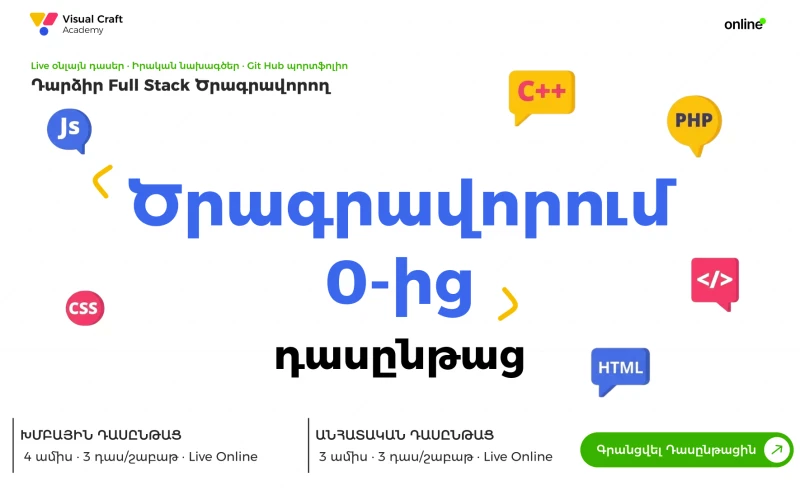
Programming lessons in Yerevan help beginners, students, career changers, and working specialists build practical coding skills in a structured way. On Turn.am, you can browse programming tutors and course providers, compare the subjects and learning formats they offer, and contact a provider directly to discuss your goals. Listings may suit learners seeking an introductory coding course as well as those who want to strengthen knowledge for a particular technical direction.
The category covers instruction in widely used programming languages and development disciplines, including Python, Java, JavaScript, C++, HTML and CSS. Whether the aim is to understand programming fundamentals, create websites, prepare for a technical role, or gain experience through projects, programming classes can be adapted to different starting levels and study plans. Turn.am is a marketplace that helps users find and communicate with independent providers, rather than delivering the lessons itself.
What Programming Lessons Can Include
Programming education often starts with the core concepts that make later learning easier: variables, data types, conditions, loops, functions, arrays or collections, and basic problem solving. A beginner programming tutor may explain how to read code, break a task into smaller steps, identify errors, and turn an algorithm into a working program. This foundation is useful for school students, university learners, and adults who have not previously studied coding.
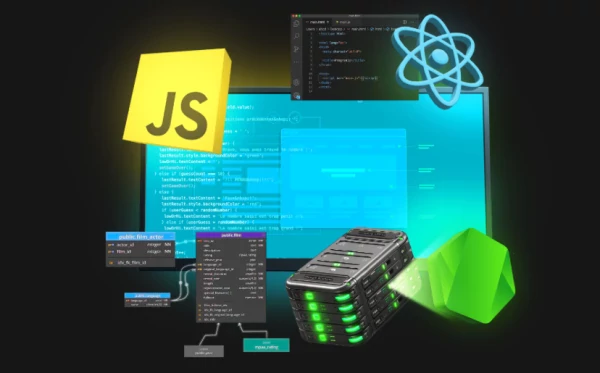
Language-focused lessons can concentrate on the tools needed for a chosen path. Python courses may cover syntax, data handling, automation exercises, and introductory application logic. Java programming lessons can address object-oriented principles, classes, methods, and program structure. C++ instruction may focus on fundamental programming constructs, memory-related concepts, and solving algorithmic tasks. JavaScript lessons commonly support interactive web development, while HTML and CSS classes introduce the structure and visual presentation of web pages.
Web programming courses can bring these subjects together for learners who want to understand how websites are built. Front-end instruction may include page layout, responsive interfaces, browser-side behavior, and organizing a small website project. Depending on the provider’s focus, broader web development training can also introduce back-end concepts, data exchange between a site and a server, or the workflow behind a complete web application. It is useful to clarify which part of web development a course actually covers before enrolling.
Some programming lessons are designed around hands-on work rather than only theory. Learners may practice by building a personal portfolio page, a simple interactive site, a basic application feature, or small exercises that gradually increase in complexity. Project-based learning can show how separate topics connect in a real task, from planning the logic to testing and improving the result. For people considering an internship or an entry-level technology role, this type of practice can also help reveal which subjects need further attention.
Children and teenagers may benefit from coding classes that introduce logic through age-appropriate activities, visual examples, guided tasks, and gradually more independent work. Adult learners, meanwhile, may look for a clear route from zero knowledge to a specific development skill. Individual tutoring can allow questions to be addressed at the learner’s pace, while group programming courses can provide a shared schedule and discussion with other participants. The suitable format depends on learning preferences, available time, and the complexity of the intended subject.
How to Choose a Programming Tutor or Course
Begin by defining a concrete objective. Someone who wants to make a basic website may need HTML, CSS, and JavaScript, while a learner interested in general coding logic might start with Python or C++. If the goal is a career transition, ask whether the curriculum includes the practical subjects relevant to the intended role. A broad course can be valuable for orientation, but a focused program may be more appropriate when a particular language or development area has already been selected.
Review the course outline and ask how lessons progress from one topic to the next. Useful details include the expected starting level, whether prior mathematics or computer knowledge is needed, how much time is devoted to exercises, and whether learners receive feedback on assignments. For web development lessons, it can help to ask what kind of site or application learners will be able to build by the end. For language-specific training, discuss the types of problems and projects used during instruction.
Learning format matters as much as the subject. Compare one-to-one tutoring with group classes, online sessions with in-person study where offered, and short introductory courses with longer programs. Consider the lesson schedule, the instructor’s communication style, the language used for explanations, and whether questions can be discussed between or during lessons. Learners who have already attempted coding may also want to share the topics they find difficult, such as loops, functions, object-oriented programming, or debugging, so the provider can explain whether the lessons fit those needs.
It is also sensible to discuss practical expectations before making a choice. Ask what software or computer setup is needed, whether homework is part of the course, how progress is assessed, and whether the provider uses examples connected to the learner’s interests. A clear conversation about the curriculum, workload, and desired outcome helps make comparisons more meaningful than choosing solely by a course title.
Programming Lessons in Yerevan and Across Armenia
Demand for programming lessons is especially strong in Yerevan, where learners may search for coding tutors, web programming courses, and beginner-friendly technology training. Providers listed in this category may also serve students and professionals in other parts of Armenia, including Gyumri, Vanadzor, Vagharshapat, Hrazdan, Abovyan, Kapan, and other regions. Availability, lesson format, and the subjects taught can vary by provider, so check each listing and contact the provider directly to confirm the details relevant to your situation.
Use Turn.am to compare programming lesson options, review the information providers share about their subjects and formats, and contact the ones that match your learning goals. A focused first conversation can help you choose instruction that supports your next coding project, academic needs, or professional development plans.