






Filters
Swimming Pool Construction & Installation in Yerevan, Armenia and Other Regions
Planning a new pool involves far more than choosing its shape and finish. This category helps homeowners, hospitality properties, sports facilities, and commercial sites find providers for swimming pool construction and installation in Yerevan, with listings that may also serve projects in other parts of Armenia. On Turn.am, users can review relevant services, compare the scope offered by different pool builders and equipment installers, and contact providers directly to discuss a specific project.
Whether the goal is a compact private plunge pool, an outdoor pool for a villa, or a larger swimming area for a hotel or recreation site, the work commonly combines excavation, structural construction, waterproofing, plumbing, electrical connections, and water-treatment equipment. Providers in this category may focus on complete pool installation or on an individual stage, such as installing filtration equipment, lining a pool shell, fitting underwater lighting, or completing a tiled interior.
What swimming pool construction and installation can include
A pool project usually begins with assessing the site and defining the intended use of the pool. This can affect the dimensions, depth profile, access points, location of technical equipment, drainage needs, and the choice between an in-ground structure and a prefabricated shell. Before work starts, it is useful to clarify where the pump and filter equipment will be placed, how water and electricity will reach the system, and how the surrounding area will be finished.
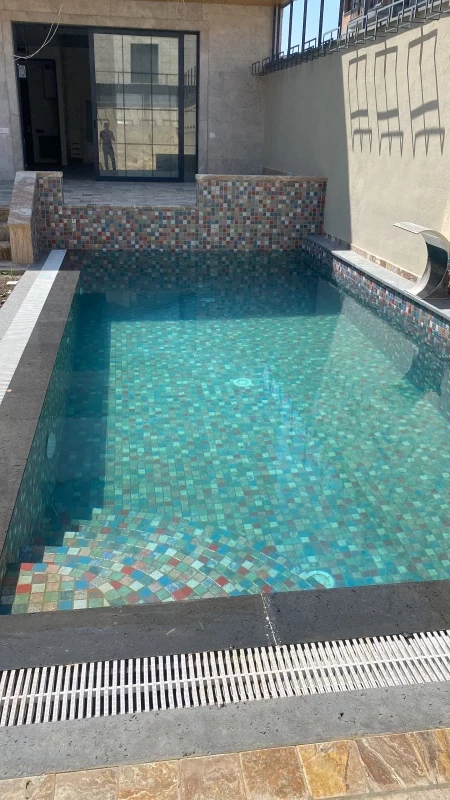
Concrete or monolithic pool construction is often selected when a project requires a custom layout. The process can include excavation, preparation of the base, reinforcement work, concrete pouring, shaping steps or benches, and treatment of joints and penetrations. Because the pool basin must retain water over time, waterproofing is a central stage rather than a decorative afterthought. Depending on the planned finish, a contractor may prepare the surface for pool plaster, ceramic or mosaic tile, or another compatible coating.
Some projects use alternative construction methods. A vinyl liner pool uses a durable membrane as the internal water-retaining surface and can be suitable for layouts designed around that system. Fiberglass or composite pools use a factory-made shell that is delivered to the property and installed in a prepared excavation. When comparing these approaches, clients should consider the site access needed to bring in materials or a shell, the desired pool geometry, the finish they prefer, and the coordination required between ground preparation and installation.
Pool circulation is another important part of swimming pool installation. Skimmer systems draw surface water through skimmers, while overflow designs direct water over a level edge into a channel and then to a balance tank. An overflow pool can require particularly careful setting of levels, channels, drainage, and return flow. Both types rely on correctly positioned suction and return points, pipework, valves, and equipment connections to keep water moving through the treatment system.
Providers may also install or connect technical components such as circulation pumps, sand filters, cartridge filters, chlorination systems, salt-water chlorinators, dosing equipment, heaters, heat pumps, control panels, and pool lighting. Equipment selection should fit the pool volume and intended use. A filtration system, for example, needs sufficient capacity for the basin, while heating and lighting plans should account for electrical requirements and practical access for later servicing. Work around the pump room can include pipe routing, wiring coordination, equipment mounting, and provision for drainage.
For outdoor pools, seasonal conditions deserve early attention. Proper drainage around the structure can help manage rainwater and melting snow. A project may also need a plan for covering the pool, shutting down systems before cold weather, draining vulnerable lines where appropriate, and protecting equipment during winter. These details are especially relevant for pool construction in Armenia, where summer use may be followed by substantial temperature changes.
How to compare pool builders and installers
Start by describing the project in practical terms. Include whether the pool is new construction or a partially completed basin, the approximate site conditions, the preferred construction type, the desired finish, and whether filtration, heating, lighting, or water-treatment equipment is needed. If the project includes a terrace, deck, retaining work, or landscaping, distinguish those tasks from the pool work so each provider can explain which parts they can handle.
It is helpful to ask providers about experience with pools of a similar type and with the specific technical features planned. A contractor who works on reinforced concrete basins may have a different role from a specialist installing a fiberglass shell or configuring a filtration system. For tiled pools, ask how the surface preparation, waterproofing layers, fittings, and tile installation will be coordinated. For an overflow design, discuss the balance tank, edge alignment, channel detail, and circulation layout rather than treating it as a standard skimmer pool.
Compare proposed scopes carefully. One service may cover excavation and structural work, while another may include only hydraulic installation or equipment setup. Confirm who is responsible for waterproofing, pipe pressure testing, electrical work, finish installation, equipment commissioning, and instructions for operating the system. Clear communication about materials, access to the site, project sequence, and any work that must be completed by separate trades can reduce misunderstandings as construction progresses.
Portfolios and service descriptions can help indicate the kind of work a provider presents, but they should be considered alongside direct discussion. Share relevant drawings, photographs of the site, or measurements when available. Ask questions about the proposed technical solution, including where service access will be left for pumps, filters, valves, and controls. This makes it easier to compare like-for-like proposals rather than choosing based only on a broad description of pool building.
Pool construction availability in Yerevan and across Armenia
Swimming pool construction is commonly sought for residential and commercial properties in Yerevan, where villas, hotels, guesthouses, and leisure spaces may require new pool facilities or technical installation. Depending on the provider and project requirements, services in this category may also be relevant in cities such as Gyumri, Vanadzor, Vagharshapat, Hrazdan, Abovyan, and Kapan, as well as other regions of Armenia. Availability, travel arrangements, and the ability to handle a particular site should be confirmed directly with each provider.
Use Turn.am to compare swimming pool construction and installation services that match the type of basin, finish, and equipment your project requires. Contact providers directly to discuss the location, technical goals, and stages of work before selecting the right fit for your pool project.