




Electrician Services in Gyumri
When electricity fails or a socket, switch or light stops working, replacing the visible part without finding the cause can leave the fault unresolved. An electrician can inspect the affected circuit, carry out suitable tests and explain whether the job is a small repair or part of a larger wiring problem. On Turn.am, you can compare independent electricians serving Gyumri and contact them directly.
Decide whether the call is urgent
Burning smell, smoke, sparks, melted fittings, visible scorching, electric shock or tingling from metalwork requires prompt attention. Stop using the affected circuit or equipment and keep people away. If there is an immediate risk of fire or electrocution, isolate power only if it is safe to do so and contact the appropriate emergency service.
Do not touch exposed wires, open live equipment, use water near an electrical fault or keep resetting protection that trips immediately. A photograph or phone conversation cannot confirm that an installation is safe.
Describe the symptom, not your own diagnosis
Tell the electrician when the problem started, whether it is constant, which rooms and devices are affected and what was operating at the time. Mention recent drilling, water leakage, renovation, a new appliance, unusual sound, heat or smell. This sequence can help distinguish a single faulty appliance from a circuit or supply problem.
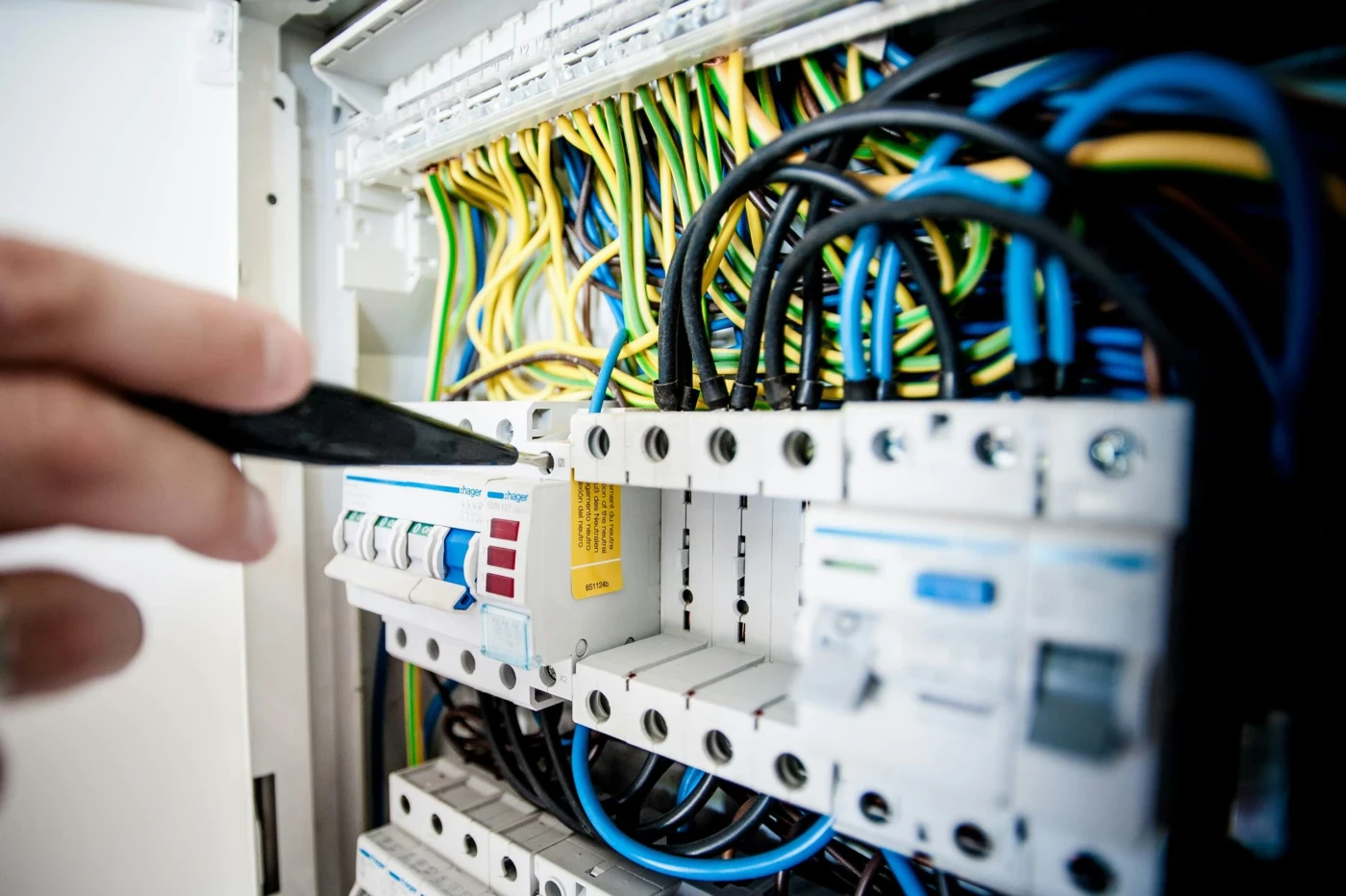
From a safe position, photograph the outside of the distribution board, its labels and visible damage. Do not remove covers. State the property type, access time and the make and model of relevant equipment. If the fault is intermittent, keep a simple record of when it occurs rather than repeatedly recreating a dangerous condition.
Power loss and tripping protection
Loss of power may affect one fitting, one circuit or the whole property. The electrician may need to establish whether the issue is within the property, a connected appliance or the incoming supply. Do not assume every outage is an internal wiring failure.
A breaker or residual-current device can trip because of overload, damaged wiring, moisture, faulty equipment or another condition. It should not simply be replaced with a higher-rated device. Protection must remain suitable for the conductors and circuit, and repeated operation requires diagnosis.
Common repair and replacement tasks
- fault finding for sockets, switches, lights and circuits;
- replacement of damaged accessories and compatible lighting components;
- repair of loose or overheated connections after assessment;
- installation of a limited number of new points or fixtures;
- checking a circuit before connecting an appliance;
- distribution-board inspection, labelling and minor corrective work;
- recommendations when larger rewiring or installation is required.
Confirm the provider’s scope. A repair electrician may not undertake a complete redesign, and internal repair of an appliance may require a different technician.
What happens during diagnosis
The electrician should inspect the reported area and use appropriate measurements to narrow down the source. Concealed or intermittent faults may take time because several possible causes must be tested systematically. A quick part replacement is not necessarily a complete diagnosis.
Ask what evidence supports the conclusion, which repair is proposed and whether any related risk remains. If the job expands to opening finishes, replacing a cable route or changing the board, agree on the revised scope and price before continuing.
Prepare the property safely
Provide clear access to the affected fitting and distribution board without moving anything that exposes electrical parts. Tell occupants which area should not be used and keep children and pets away from the work zone. If a business or essential appliance will lose power, explain this before the visit so shutdown can be planned.
Do not purchase parts solely from appearance. A replacement must suit the circuit, load, enclosure, environment and connected equipment. Let the electrician confirm the specification or agree the exact product before purchase.
Repair price and call-out terms
The cost may include travel or call-out, diagnostic time, labour, materials, urgent attendance and a return visit. A known standard replacement may be estimated from good information, while an unknown fault usually requires on-site testing before the total can be confirmed.
Ask what the call-out fee includes, how additional time is charged, who supplies parts and whether testing is included. Require approval before optional work or a material change in price. Compare the complete diagnosis and repair, not only the lowest arrival fee.
Check the result before completion
After repair, the electrician should perform the visual checks and electrical tests appropriate to the circuit and work completed. Depending on the case, verification may address connections, polarity, insulation, earthing, protective-device operation and function. Simply switching a light on once may not be sufficient.
Keep the invoice, replacement-part information, explanation of the fault and written warranty terms. If the repair is temporary or further work is recommended, record the limitation and next step. The distribution-board labels and any affected documentation should be updated where needed.
Find an electrician in Gyumri
View electrician listings on Turn.am, compare the information published by independent providers and contact suitable electricians directly. Turn.am does not perform the work or determine the provider’s price, arrival time or warranty.