







Gift Wrapping Services in Yerevan
Gift wrapping has two jobs: it creates the moment of presentation and helps the contents reach that moment in good condition. A paper-wrapped book, a bottle in a fitted box, a hamper of food products and a branded employee gift are not variations of one standard package. Each requires different decisions about structure, protection, materials, labelling and transport.
Turn.am allows users to find independent gift-wrapping providers in Yerevan and review the services they publish. Some may focus on individual presents and decorative styling, while others may accept personalised or repeated business orders. Turn.am does not wrap the item or set the provider's terms, so the exact materials, deadline, price and handover arrangements should be confirmed directly.
A successful package begins with the contents
The provider needs accurate dimensions, approximate weight and clear photographs before recommending a format. Measure length, width and height at the widest points, including handles and projections. Mention sharp corners, delicate finishes, moving parts and anything that must remain upright. If the item already has retail packaging, explain whether it may remain visible, must be concealed or needs a stronger outer box.
A photograph is useful for an initial discussion but can hide scale, weight and instability. A regular box can often be measured remotely; an irregular, fragile or valuable object may need to be seen before the final structure and quotation are confirmed. Bringing the item also lets the provider test whether a box closes correctly and whether the contents shift when carried.
Decorative wrapping is not shipping protection
Paper, tissue and ribbon are presentation materials. They do not by themselves protect glass, ceramics, electronics or a heavy object. Fragile contents need cushioning and enough separation from the sides of the container. Several hard items in one box may need individual compartments so they cannot strike each other. A heavy gift requires a base and carrying method designed for its weight.
The finished presentation may also need an outer transport bag or carton. This is particularly relevant to raised bows, dried or fresh decorative elements and light-coloured paper that can be marked during a journey. Decide whether the decorative package will be handed directly to the recipient, carried through several locations or sent by a separate courier. The route affects how much external protection is sensible.
Choosing between paper, a gift box, a bag and a hamper
Paper wrapping works well when the object already has a firm, regular container. A gift bag is convenient for soft goods and shapes that do not need to remain fixed, although tissue and a base may still be required. A rigid or folding box hides the contents and can support a carefully arranged interior. An open basket or hamper displays the products but needs secure placement and transparent or external protection during transport.
Material choice also affects the appearance. Uncoated paper, fabric, glossy finishes, patterned sheets, cord and satin ribbon create different impressions and behave differently around corners. Rather than selecting every element separately, describe the mood: understated, celebratory, playful, romantic, traditional or consistent with a business identity. Reference images are most useful when accompanied by an explanation of what you like about them.
Mixed gift sets need an internal layout
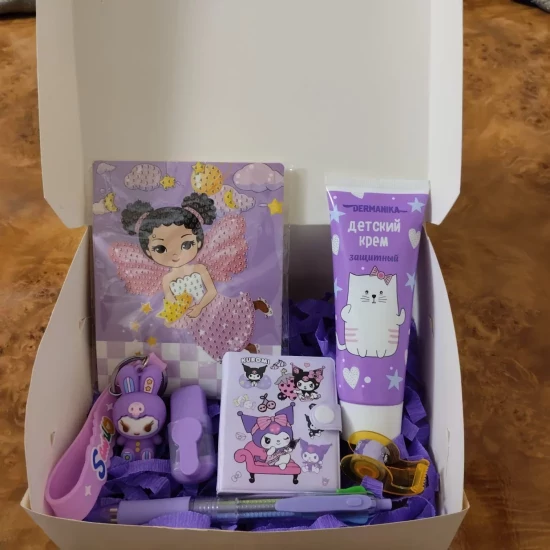
A multi-item set should be planned as a composition. Identify the focal item, arrange labels so they remain readable and use filler to hold the contents at useful heights. The filler should support the products rather than merely occupy empty space. Loose decorative material should not scratch surfaces, enter food packaging or interfere with caps and closures.
Tell the provider about every type of content. Bottles and jars should remain stable, cosmetics and other liquids need secure closures, and candles or chocolate may require thoughtful storage. Food should stay in appropriate primary packaging and be separated from inks, adhesives and non-food-safe decorative elements. Fresh flowers have different handling needs from durable products and should be added with the timing of delivery in mind.
Personalisation should be proofread, not assumed
A name tag, printed sleeve, photograph, monogram or handwritten card can make a simple package feel considered. Send the final wording in writing and state the required language. Check names, dates, titles and punctuation before anything is printed. For multilingual cards, provide each approved version rather than asking the wrapping provider to translate personal or corporate text.
Ask for a proof when positioning or typography matters. A digital preview can confirm spelling and general layout, while a physical sample may be more appropriate for a special box, an unusual material or a repeated order. Also consider how personal details are handled: recipient lists should be shared only with the people who need them and used for the agreed order.
Planning a one-off present
For an individual order, provide the occasion, the recipient's general preferences, the item details, preferred colours, budget range and the time the package must be ready. If the present is a surprise, say whether the contents must be completely concealed. Mention any element you do not want, such as glitter, artificial flowers, a particular colour or a conspicuous logo.
Confirm whether the service includes only wrapping or also the box, protective filler, card and delivery. If you are supplying some materials yourself, check that their size and strength suit the item. A ribbon or sheet purchased for its appearance may not be long or wide enough once the actual measurements are considered.
Corporate orders are small production projects
A repeated order needs a controlled specification. Begin with one complete sample showing the box dimensions, interior arrangement, paper, ribbon, logo position, card and method of closure. Once approved, keep photographs and a written list of materials so everyone assembling the batch follows the same reference. Approval should cover the physical package, not only a colour swatch or a digital mock-up.
Provide a final item count and identify any variations. If gifts have different names, departments, languages or contents, use a structured recipient list with one row per package. Logo artwork should be supplied in a format appropriate for the chosen production method; a small image copied from a website may not reproduce cleanly. Proofread all versions before batch printing begins.
When components arrive from several suppliers, assign responsibility for receiving and counting them. Decide what happens if an item is missing, damaged or replaced. Sealing incomplete sets and reopening them later wastes both labour and custom materials. A small quantity of spare neutral cards or packages may be useful, but it should be an agreed part of the order rather than an unapproved addition.
Timing, collection and delivery
Availability of a suitable box or paper can affect even a straightforward order. Custom dimensions, printing, personalisation and large quantities add stages for sampling and approval. Work backwards from the actual handover date and leave time to inspect the result. An urgent deadline may limit the design to materials already available, so ask what can realistically be completed rather than approving an option that depends on later sourcing.
Record who brings the contents, who verifies the count, who collects the finished order and whether delivery is included. Supply the complete address, a receiving contact and a practical time window. For a business batch, ask how many transport cartons will be used, how personalised packages are labelled and whether the receiving location can handle the shipment.
Understanding the quotation
A quotation may include the container, paper or fabric, cushioning, decorative filler, ribbon, tags, cards, printing, assembly and transport. Irregular shapes and delicate contents can require more design and handling than a regular box of the same size. A corporate price may also cover the sample, artwork setup, personalised labels, sorting and outer cartons.
Compare offers item by item. A low wrapping fee may assume that the client supplies the box, while another total may include a rigid container and printed card. Ask whether the quotation is based on the dimensions provided and what happens if the item or quantity changes. For custom-printed and cut-to-size materials, confirm the deposit and cancellation treatment before production starts.
Quality checks before the gifts leave
The package should sit securely, close without strain and keep the contents from moving. Paper edges should be deliberate, adhesive should not be exposed and decorative elements should be firmly attached. Check every printed name, message and logo. For reusable boxes, open and close the sample to make sure the recipient can use it without tearing the finish.
For a batch, count the completed packages against the approved list and inspect a selection from different stages of production. Confirm that personalised versions are correctly labelled before they enter outer cartons. Photograph the packed transport cartons if a third-party courier will handle them. The wrapping process is complete only when the right gift can reach the right recipient in the condition that was approved.
When comparing providers on Turn.am, look for examples that resemble your object or order size and send enough information for a meaningful proposal. A provider who understands the contents, presentation and route can recommend a more suitable solution than one asked to quote for “gift wrapping” in the abstract.