














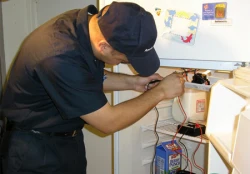
Refrigerator Repair in Yerevan
A refrigerator that feels warm, runs constantly or collects water is showing a symptom rather than naming the failed part. The same complaint can arise from a door that no longer seals, restricted airflow, frost around an internal evaporator, a sensor fault or a problem elsewhere in the cooling system. Useful repair begins with the exact model, a clear history of the behaviour and an on-site diagnosis—not a replacement part chosen from a short phone call.
Turn.am lists independent refrigerator technicians and repair services in Yerevan. Users can review the information they publish and contact a suitable provider directly. Turn.am does not diagnose the appliance, perform the repair or determine charges, so the call-out, diagnosis, parts, warranty and payment terms should be agreed with the selected technician.
Describe what each compartment is doing
Tell the technician whether the fresh-food compartment, freezer or both have lost cooling. A freezer that remains cold while the refrigerator section warms up can point the investigation toward airflow and defrost-related components, but it does not establish a diagnosis by itself. If neither section cools, the technician may need a different set of checks.
Report whether the appliance starts, stops after a short attempt, runs for long periods or remains silent. Mention any displayed error code and record a new or intermittent sound if it can be done safely. A clicking sound, fan contact or vibration is useful context, yet parts should not be selected solely from a recording.
Safe checks before arranging a visit
You can confirm that the socket has power, the controls have not been changed accidentally, the door can close and food is not blocking visible internal air openings. Check whether a drawer or container is preventing the door from sealing. These observations help the conversation without requiring panels to be opened.
Do not bypass a switch, connect exposed wires, open the compressor area or dismantle an electrical assembly. If there is smoke, a burning smell, a melted plug or socket, damaged cable, or water around electrical parts, stop using the appliance. Disconnect it only if that can be done without approaching an unsafe area, and obtain appropriate help. A fault in the household socket or wiring may require an electrician rather than an appliance repair alone.
Heavy frost in a frost-free appliance
Frost-free systems still produce frost internally; they are designed to remove it through an automatic defrost process. When that process or the circulation of air is disrupted, ice can build up behind an internal cover and eventually reduce cooling. A fan may become noisy if it contacts ice. Manually thawing the appliance can change the symptom temporarily without addressing its cause.
Never chip ice with a knife or sharp tool. Refrigerant tubing, wiring and other parts may be hidden behind the lining, and a puncture can turn a repairable fault into major damage. Ask whether the technician wants to inspect the frost pattern before shutdown or needs the unit fully defrosted in advance. If defrosting is requested, agree how to protect the floor and where the food will be stored.
Water inside or underneath the refrigerator
Water beneath produce drawers may be associated with a drain issue, while water on the floor can come from a tray, tube, condensation or a plumbing connection on models with water and ice features. Photograph the location before cleaning and note when it appears. This helps distinguish a continuing supply leak from water that develops during appliance operation.
If the model is connected to the water supply, tell the technician and identify whether the dispenser or ice maker has also changed behaviour. It may be appropriate to close the relevant supply valve while waiting, provided it is clearly identifiable and safely accessible. Do not dismantle a pressurised connection merely to locate the leak.
Door sealing, gaskets and installation
A poorly sealed door allows warm, humid air to enter. That can lead to condensation, frost and longer running times. Inspect the gasket for debris, folds, tears and sections that do not contact the cabinet. Also check whether shelves or packages obstruct closure. Send photographs of the full closed door and the suspected gap.
A new gasket is not always the correct first answer. Hinges, door alignment or the way the cabinet is standing can affect contact. If the refrigerator was recently moved, reinstalled or integrated into cabinetry, mention this. For a built-in model, explain how it is accessed and ask whether removal from the housing and reinstatement are included in the visit.
What professional diagnosis may involve
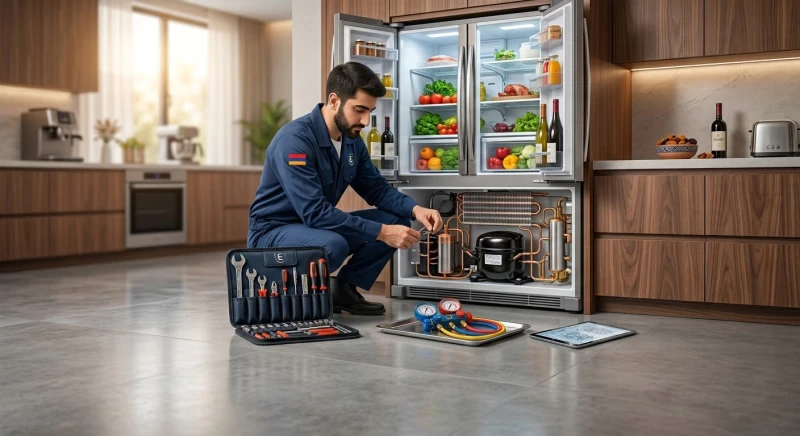
The checks depend on the design and reported fault. They may include the power and control functions, temperature sensing, fans and air paths, defrost components, drainage, door sealing, compressor starting components and the sealed refrigeration circuit. A responsible explanation links the test result to the proposed repair rather than presenting a long list of possible parts.
Work on the sealed system requires appropriate equipment and expertise. If refrigerant is proposed, ask why the charge may have changed and what assessment has been made for leakage or another underlying issue. Adding refrigerant without discussing the cause should not be treated as a complete diagnosis. Owners should not attempt to open, solder or charge the circuit.
Prepare the model and fault history
Photograph the appliance data label so the provider receives the complete model identifier. Its location varies, so avoid moving a heavy refrigerator dangerously to search for it. Also send the control panel, error display, frost pattern, leak location or damaged gasket where relevant. A front photograph alone often cannot identify the technical version.
State when the issue began, whether it is constant or intermittent, which compartment is affected and whether a power interruption, relocation, cleaning or previous repair occurred beforehand. Tell the technician if the appliance has already been switched off or defrosted. This information supports preparation for the visit, while the final conclusion still depends on inspection and testing.
Protecting food while cooling is unreliable
Move perishable food to reliably cold storage when possible. Do not judge questionable food only by smell and do not taste it to decide whether it is safe. The technician's role is to repair the appliance, not certify stored food. Use current official food-safety guidance when deciding what can be kept, especially when the duration of inadequate cooling is unknown.
Ask whether the compartments should be emptied before the appointment. The technician may need access to internal panels, but may also want to observe actual frost or water before the appliance is defrosted. Planning this step avoids losing useful evidence or leaving food out unnecessarily.
Parts, quotation and repair approval
A quotation can include the call-out, diagnostic fee, labour, parts, consumables and a return visit. Clearing a drain, replacing a sensor or fan, repairing a defrost fault, working on a control board and replacing a compressor are different assignments. Access, model design and part availability also affect the total.
Before a part is ordered, ask for its name, compatibility with the complete model and whether it is new or supplied on another basis. Confirm what is payable if the owner declines repair after diagnosis and whether the diagnostic charge is credited toward approved work. If testing uncovers an additional fault, obtain an explanation and revised price before expanding the job.
When the cost is substantial, ask the technician to explain the condition of the appliance and the limits of the proposed repair. A repair provider cannot guarantee the future condition of unrelated ageing components. The decision should be based on the confirmed fault, repair scope, appliance condition and terms—not a vague promise that the refrigerator will become “like new.”
Verifying a repair that needs time to stabilise
Cooling performance may not be fully apparent during a short visit. Ask what settings should be used, when performance can be meaningfully checked and which behaviour would justify a return call. Immediately inspect the areas that were opened, confirm that doors close, and check for a continuing leak or the same error code.
Keep the description of work, part information, proof of payment and any written warranty terms. The terms should identify what repair or component they cover and how to contact the provider. Do not consider power-on alone to be proof of success; verification should relate to the original failure, whether that was temperature, frost, drainage, noise or operation.
Finding a refrigerator technician through Turn.am
Compare listings for relevant appliance experience and ask whether the provider works with your model and fault category. Send the same model information and symptom history to the technicians you compare. Their response should explain what can be estimated remotely, the diagnostic charge and what may change after inspection.
View refrigerator repair listings on Turn.am and contact a suitable Yerevan technician directly to arrange diagnosis and discuss the repair.